
https://theconversation.com/outsider-art-can-refashion-how-we-think-about-mental-illness-36439
Academic rigour, journalistic flair
Outsider art can refashion how we think about mental illness
Published: January 20, 2015 10.44am GMT
Author
- Victoria Tischler Senior Lecturer in Psychology, University of the Arts London
Disclosure statement
Victoria Tischler does not work for, consult, own shares in or receive funding from any company or organisation that would benefit from this article, and has disclosed no relevant affiliations beyond their academic appointment.
Partners
The Conversation UK receives funding from these organisations
 We believe in the free flow of information
Republish our articles for free, online or in print, under Creative Commons licence.
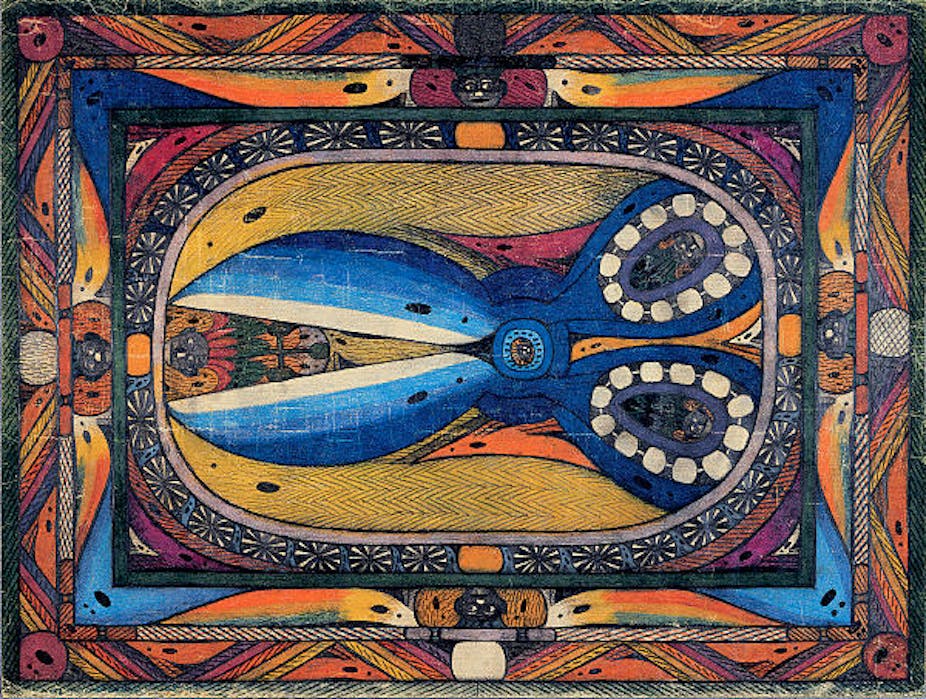
Organisations such as MIND work tirelessly to raise awareness of mental health problems and real progress has been made in destigmatising mental illness through campaigns such as Time to Change and Black Dog.
But some mental illnesses suffer more from bad public perceptions. What of the more stigmatised and often chronic conditions such as schizophrenia, dementia or personality disorders? What of those who cannot cope with independent living, are incarcerated, or living alone in abject poverty? Those with unwashed hair, overweight through medication and poor diet, unable to engage in nurturing, intimate relationships. Can we fashion a new understanding of mental illness that will improve their lives?
I work with people at the sharp end of mental health care – those deemed too ill or too risky to live in society among us. People in institutions, who cannot cope with real life, who have lost touch with reality. Amid these severe dysfunctions, complex problems, rejections and repressions, one thing that remains is creative vision which reveals itself with a boom or very quietly.
Some without speech create grand visions on paper. Others repent their sins on canvas. Those with forearms covered in self-inflicted scars sit quietly and intently carve complex symmetrical patterns into printing materials. The severely agitated sit transfixed as they paint.
Join our readers who subscribe to free evidence-based news
This creativity can offer a different way of thinking about mental illness – both in mental health campaigns, potential therapies, and maybe via fashion.
Fashion, art and mental illness
There exists a natural space for the mentally ill in the fashion and art worlds. Both of these worlds nurture and even celebrate eccentricity, flamboyance, and unfettered vision. Artists and designers are celebrated style-setters. Fashion and art in society represents the “cool”, the “edgy” and the desirable. High fashion is fuelled on fantasy, innovation and experimentation. Can these be harnessed to improve the lives of the most vulnerable, and to fashion a new and desirable view of mental health?
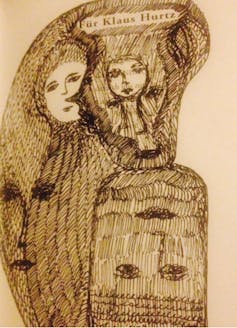
There is enormous interest in the art of those deemed mentally ill. At the Outsider Art Fair in a chic Parisian hotel recently a gallerist from New York commented that collectors specifically request work by “manic depressives or schizophrenics”. The importance of the art of people who are mentally ill is gaining recognition.
In 2013 there were no less than five major exhibitions of outsider art in Europe. While “outsider” doesn’t automatically equate with mental illness, most outsider artists could be described as eccentric – and some have diagnosed mental illness. A number of studies support links between mental illness and creativity.
Through my research and curatorial work I have learnt that, despite wider stigma, people have a strong interest in – and attraction to – otherness, perhaps even to mental illness itself. Perhaps it reassures us of our own sanity or provides revelations of what lies beyond, in the realm of our visions and fantasies. The disinhibition of mental illness may facilitate an unfiltered perusal of our inner lives. Outsider art allows us to indulge in these depths, but from a discreet distance.
Delving into the unconscious
The art created by outsiders reveals illuminating truths about what it is to be human. The work is real and pure – and has a depth that contrasts with the often contrived offerings of conventionally trained artists. It shows us what we dare not think, let alone speak. The artists tell seemingly bizarre stories, translate hallucinatory experiences, or depict imaginary and fantastical worlds which trace painful personal trajectories. They reveal the psyche; our dreams, our nightmares, the afterlife. The art is unknowing yet visionary. The artists do not subscribe to standard art-school criteria – and this is what separates them from the mainstream.
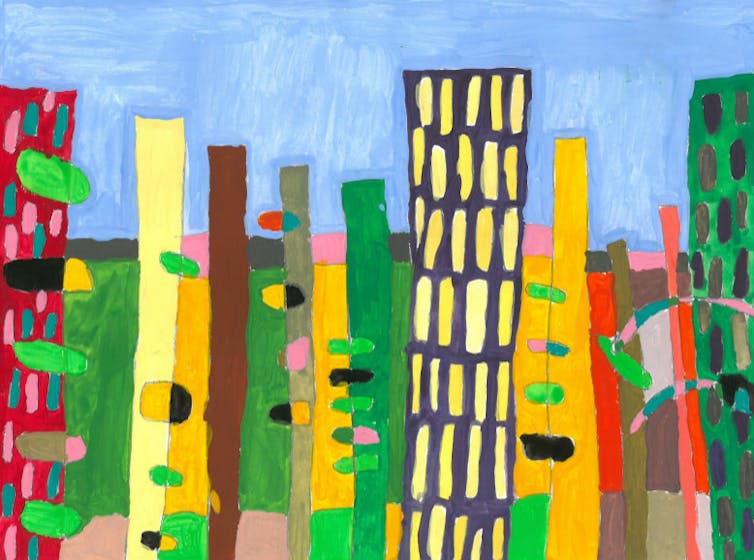
From a psychoanalytic perspective, outsider art delves into our vast unconscious, that part which represents us but which we barely recognise or are aware of. We look, in order to understand the other and to understand ourselves. Outsider art adds gravitas to an existence that nowadays can feel very superficial. It is uncensored. It transcends speech.
Outsider artists report being compelled to create work, drawing and painting obsessively for hours and days at a time. This is fascinating, especially if the same individuals experience severe difficulties in day-to-day living as is often the case with serious mental illness.
Our interest in the art of the mentally ill may follow from a morbid fascination with the diseased, the odd, the eccentric. In Victorian times the public would visit asylums as a pastime to view “the lunatics”. Care in the community policies means that the “mad” now live among us but not alongside us. The muttering old woman in the cafe, the dazed and staring sunken eyes of the unknown figure lying on cardboard on a busy London thoroughfare, the woman with knotted hair, swearing at full volume on an underground platform as the train pulls in.
In the past the melancholic was viewed as a romantic outsider, creating poetry and music laden with sorrow, misery and pathos. There is a long tradition of art as foundational to culture and artistic practices tend to be ritualised, curated and held in high esteem so could be potentially therapeutic both for individuals and collectively for example via art workshops and exhibition of artwork created by those with mental illness.
Making mental health fashionable
At the London College of Fashion (LCF), the campaign Making Mental Health Fashionable brings together artists, curators, psychiatrists, psychologists, designers, policy makers and those with mental health problems to develop ideas and projects to change our views about mental health and to challenge negative perceptions about mental illness. The aim is to fashion the meaning of mental illness into something more positive and desirable.
The allure of outsider art is testament to the appeal of the talents of those on the periphery of society. Combining this with the innovative and style-setting powers of the fashion industry as a collaborative venture promises much.
Projects in development include “fire starter”, a project with textile designers creating garments and accessories inspired by art made by people with mental health problems. A series of seminars at LCF will explore art-fashion collaborations with labels Comme des Garçons, Raw Vision, Clements Riberio and the Museum of Everything.
My hope is to engage fashion students with mental health issues and to create exciting, thoughtful and aesthetically pleasing garments that the public will want to wear and which challenge negative ideas about mental illness.
A meek, smartly dressed, young middle-class woman in a psychiatric hospital recently told me it was the first time she’d been ill but that she was likely to spend a long time in the secure facility. Her “normal” demeanour reminded me how close many of us are to madness. It takes but one cruel genetic swipe, an adverse life event; a bereavement, childhood abuse, or a great love gone awry. It’s time to value the experiences and skills of those with mental illness, and to enlist their creative talents to refashion our thinking about mental health.
Canisgallicus.com
Song of choice:

 canisgallicus
