
Maura O’Donohue: A voice that resonates
(IRELAND)
Die Zeit [Hamburg, Germany]
May 21, 2021
By Doris Reisinger
The Irish religious sister and doctor Maura O’Donohue campaigned against abuse of power by priests around the world. She helped survivors with discipline and sensitivity.
One of the many peculiar things about Catholicism is that even the outstanding women of this church remain almost unknown. One of them is the Irish nun Maura O’Donohue of the Medical Missionaries of Mary. Unusually for a woman of her generation, she had an academic degree, was appointed to management positions in her mid-twenties, spoke several languages, and managed a budget of millions. But what is possibly her greatest distinction of all, where she seems at first glance to have failed: in the fight against sexual abuse. This failure cannot be blamed on her, because survivors could not have found a more competent, committed, and better networked advocate than she.
The life and actions of O’Donohue, who died in 2015, were characterized by loyalty and faithful adherence to the applicable rules. Just as the church wishes her women religious to do. But that is precisely why she was not ready to look the other way when confronted with injustice, suffering, and rule violations.
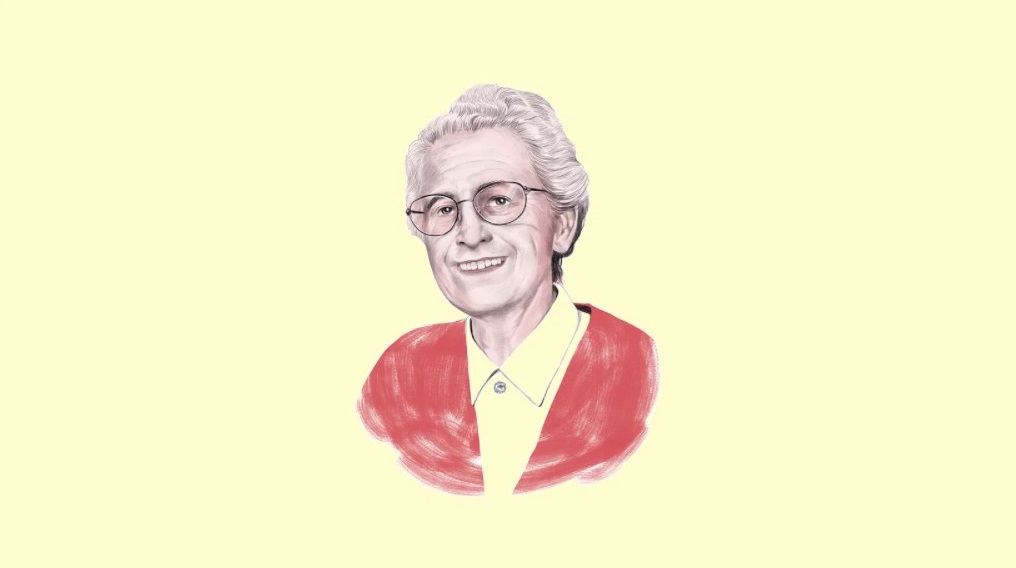
There are some photos and video recordings of Maura O’Donohue. You can see a fine smile, inconspicuous clothing, and a straight posture. This woman radiates tremendous discipline. Maura O’Donohue has been described as smart, sensitive, and articulate by people who knew her. A person in whom willingness to serve, skill, and tenacity combined to form an impressive character, and above all: a woman who knew how to convince others.
She was born Mary Brigid O’Donohue in 1933 in a small town in sparsely populated County Clare on Ireland’s west coast. Barely of legal age, she joined the MMMs, the Medical Missionaries of Mary, in 1950. The order, founded only 13 years earlier, had set itself the task of bringing medical assistance where it was most needed. Upon joining, Mary was given the name Sr. Maura. She studied medicine in Dublin and was posted to a small town in southern Nigeria in 1958. In the following year, Dr. O’Donohue was appointed to the General Council of the order.
The greatest challenge of her life began 30 years later. In 1988 the British sister organization of Caritas, CAFOD, the Catholic Agency for Overseas Development, started an AIDS program. Maura O’Donohue, who for years had seen the AIDS epidemic make emergencies worse around the world in her daily work with lepers and in famine relief, took over the leadership of the program. She was responsible for HIV care, education projects, and the support of AIDS orphans, and organized cooperation with other organizations. In just three years she was able to set up 89 projects in 18 countries on three continents. One of her greatest successes was to get important church leaders and door-openers on board in the AIDS work. That was anything but easy, because within the Catholic Church, AIDS was initially seen as a pure “fringe group” problem. Above all, people were not prepared to question the church’s ban on contraceptives.
The willingness to get involved in the targeted fight against HIV was therefore not particularly pronounced in the leadership of the Catholic Church. O’Donohue knew about this problem and faced it. In retrospect, Matthew Carter, the director of CAFOD’s humanitarian aid, sums up her merit: “She was acutely aware that the Catholic Church could be either a part of the problem or part of the solution, with regard to HIV. From the outset she was determined to ensure Church-based responses were an effective and significant part of the solution. She made a difference” Together with the head of Caritas she traveled around the globe. She sensitized bishops’ conferences, orders, diocesan assemblies, seminaries, and theological institutes in Africa, Asia, and Latin America to the AIDS epidemic and won their support.
Maura O’Donohue knew that HIV was more than a disease. It was a crisis that exacerbated all of the core problems of development work: poverty, abuse of power, and powerlessness – especially the economic and sexual powerlessness of women. It also made things visible that had previously been hidden. This included the sex life of Catholic clergy in the countries particularly affected by AIDS.
Maura O’Donohue was in her mid-fifties at the time, a seasoned religious sister and development worker. She had already seen a lot. But what she heard and experienced now stunned her. In order not to infect themselves, priests apparently went to prostitutes less often and resorted increasingly to sexual assault. There was the story of the young woman who had recently converted to Christianity against the protests of her Muslim parents and wanted to enter a monastery. To enter, she needed a certificate from the local pastor. He raped her before handing her the paper. When she found out that she was pregnant after entering, she left the monastery, feeling ashamed, completely perplexed, and scared. She couldn’t go back to her parents. The pregnant young woman hid in the forest for ten days before going to the bishop. The only measure that the bishop took against the confessed pastor: He prescribed him 14 days of reflection.
The Vatican did nothing
O’Donohue heard similar stories over and over again: pastors expecting sexual services in exchange for credentials. Religious sisters who had to leave their monasteries after being infected or becoming pregnant. Bishops who ignored accusations and calls for help. Little by little it became clear to her: Sexual violence that priests perpetrated against women religious had not been triggered by AIDS, but had only become more visible. It was a problem in itself, and it was an even more sensitive issue than AIDS. In order to make a difference in this matter within the church, she would have to use the concentrated diplomatic expertise she had gathered in dealing with top church staff during the AIDS epidemic. Going public was out of the question for O’Donohue. She wanted to solve the problem in the expected way within the church, and she knew that it would be anything but easy, because she had to get those responsible in the Vatican to take care of the problem.
In February 1994, Maura O’Donohue wrote a strictly confidential report to Cardinal Martínez Somalo, then Prefect of the Congregation for Religious in Rome. This is the authority responsible for members of religious orders around the world. O’Donohue writes of “many confidences” that she had with a “great number of sisters.” She referred to priests, medical staff, and “other members of loyal ecclesial family” who could testify to “the exploitation of sisters and other women by priests.” She stressed that “case records exist for several of the incidents described … and that the information is not just based on hearsay.” She expressly writes that such cases are neither limited to “any single country or even continent, nor indeed to any one group,” but that they stem from “experience over a six-year period and relate to incidents in some 23 countries in five continents.” She names all of these countries, including the USA, Colombia, Ireland, Italy, India, Papua New Guinea, and the Philippines.
The examples that she describes are beyond imagination: In several countries there is the rule that pregnant women religious have to leave the monasteries. Afterwards, they and their child are condemned to extreme poverty, and quite a few are forced to prostitute themselves and expose themselves to the risk of an AIDS infection if they are not already ill. The priests, who often impregnated these women by force, would remain in office. Superiors of the order would be completely at a loss. In one case, a superior had to send more than 20 sisters away because they were pregnant. Catholic hospital workers report that priests pressured them to perform abortions. Other priests advised nuns to take the pill and persuaded them this would protect them from AIDS. In some cases, priests would molest teenagers or married women. In a parish that protested in vain, there were even armed attacks on the rectory. In the last third of the report, O’Donohue lists consequences and recommendations before closing with the words: “There is something prophetic in this tragedy, because it is the “voiceless” who have prompted this maturing process…. I pray that their pleas for help and understanding will not go unheard but will receive an equally courageous and prophetic response.”
About a year later, on February 18, 1995, O’Donohue was invited to Rome to talk to Cardinal Martínez Somalo and some of his closest collaborators. Among them was only one woman, the American canon lawyer Sr. Sharon Holland. The very beginning of the conversation was sobering. The head of the congregation was hardly prepared. There wasn’t even an agenda. With haunting words, O’Donohue makes it clear that nothing has changed in the dramatic situation. With diplomatic sensitivity, she also referred to “some good things” such as workshops that she had organized for religious orders and bishops’ conferences. At the same time, she referenced “sad experiences.” In the meantime, some orders refused in principle all candidates who brought credentials from pastors with them. The likelihood that they were sexually abused, infected with AIDS, or pregnant in exchange for the letters was too high. She told of an abused young religious who had died as a result of an abortion forced by her tormentor, whereupon the perpetrator had held her funeral mass unmoved.
Towards the end of the conversation, it was not the cardinal, but Maura O’Donohue, who made suggestions: Among other things, she proposed a broad-based visitation in which at least one woman should be involved. In addition, several Roman authorities should work together to deal with the full range of the problem. Maura O’Donohue offered her support and cooperation. But in a memo that she wrote after the conversation, there is no reference to inquiries or commitments from the congregation.
In the following years other concerned church people spoke up: the nuns Mary McDonald and Esther Fangman, the Benedictine Abbot Notker Wolf. They all knew the problem and hoped Rome would do something about it. But the Vatican did: nothing. In any case, a statement by the Vatican press spokesman from 2001 suggests this conclusion. That year, O’Donohue’s reports reached the press and were published. Apparently, the press spokesman could not refer to any visitations, criminal trials, or support programs for female survivors. Instead, he limited himself to belittling the problem in a few sentences. Even after that, inquiries went unheard. It was not until 2019, 25 years after O’Donohue’s first report, that the church made the next statement on the matter. It came from Pope Francis. He no longer downplayed the problem, and even spoke of the “sexual enslavement” of women religious. But even he could not refer to convictions, compensation, or any other specific measures. Maura O’Donohue did not live to see him speak these words. She died of leukemia on May 3, 2015.
To this day, the Roman Curia does not see the violence perpetrated by Catholic clergy against women as part of the abuse crisis. To this day, clerics who perpetrate the violence go unpunished. But Maura O’Donohue’s commitment also resonates to this day. She is quoted when survivors speak, when women religious defend themselves, and when research is being carried out on the subject. Ultimately, it is precisely her supposedly failed commitment for which she has received the most gratitude to this day.
DORIS REISINGER,
37 years old, researches at the Department of Catholic Theology at the Goethe University in Frankfurt am Main. She is a Fellow of the Gender, Sex, and Power research group at Notre Dame University in the USA. She has just published a book together with Christoph Röhl: Only truth saves: The abuse in the Catholic Church and the Ratzinger system.
CHRIST & WORLD SERIES
How can the process work properly? The churches in Germany are struggling to come to terms with the issue: the sexual violence that pastors (of all people) have committed against children and young people has caused a crisis of confidence. Christ & Welt has researched and reported intensively over the past few months. We know that this is a difficult topic, but at the same time we want to fulfill our journalistic task by contributing to clarification and opinion-forming. Yes, but isn’t there anything positive? How are you doing better? Aren’t there people in the abuse scandal who have shown how to act properly? Of course there are. We want to widen our view for them – initially in a series of portraits: The author and scholar Doris Reisinger introduces three people who acted wisely and decisively: three role models. Part 1 was about canon lawyer Thomas Doyle, who recognized the extent of the abuse scandal in the USA as early as 1984 (C&W No. 20/21).
Original German text:

 canisgallicus